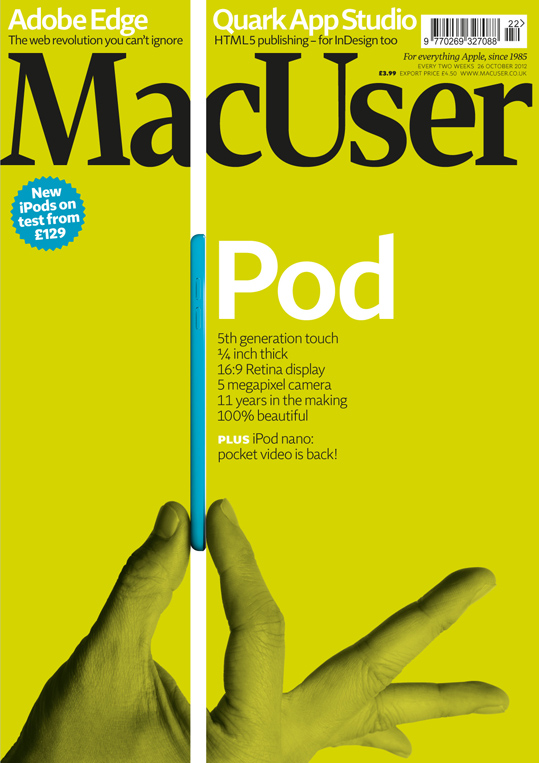
Out this week, the new issue of MacUser contains my review of Rogue Amoeba’s Fission 2.0 audio editing app, found on page 28. Nip down to the shops and pick up a copy to find out what I thought of the newly-updated version of this well-regarded, pared-down software solution that allows you to pull off lossless edits quickly and easily and convert and save them between multiple formats.

Category Archives: Published Stuff
Computer Music Special Issue – Drums
Super-excited to announce that the Drums special issue of Computer Music, to which I contributed 15 pages of technique tutorials and reviews, is now available in the shops. This comprehensive guide to everything you need to know about programming, recording, processing and mixing drum tracks contains two big features from me.
The first is a 10-page guide to programming MIDI drum tracks in different genres, and features detailed walkthroughs and audio examples covering everything from Rock and Dubstep to House and Moombahton, via Electro, Hip Hop & RnB. Whatever your preferred style, you’ll find the basics to programming a solid groove covered here, and the item begins on page 78.
Later in the book, on page 94, you’ll find my 5-page roundup of MIDI drum pad controllers. Here you can get the lowdown on machines such as Arturia’s Spark, Native Instruments’ Maschine Mikro, the Roland SPD50 Octapad and the Akai MPD26, among others, and find out which is the best pad-based controller for your needs, whether you’re a live performer or a project studio-based programmer.
At just £6.50, and packed with loads more informative features and more drum samples on the included DVD than you can shake a stick at, you’d be mad not to beat it down to the shops to pick up a copy!
iCreate 112 Is Out!
Issue 112 of iCreate hit the shelves at your local magazine boutique this week, and contained within its info-packed pages is a two-page tutorial from me on the basics of recording live instruments in GarageBand. Focussing on how to connect and configure external interfaces and microphones, setting levels, choosing monitor effects and finally recording takes, this guide should provide all the information you need to get a basic session off the ground when recording acoustic instruments with a microphone. The tutorial starts on page 48, and keep your eyes peeled for more from me in next month’s issue!
Computer Music 183 Out Now – Sample Your Surroundings, Write Memorable Melodies (With Video)
Issue 183 of Computer Music magazine hit the shelves this week, and nestling between its covers you’ll find not one, but two features from me this month.
On page 55 you’ll find a five-page guide to sampling the sort of everyday objects that you find lying around the house, to convert into unconventional musical instruments. With affordable, powerful audio workstations available to everyone these days, it’s never been easier to create your own sounds from scratch, and this guide shows you some easy ways to do it using a microphone, Logic and some of the amazing free plug-ins that are out there. So, if you want to record some coffee-tin percussion, make a one-octave wineglassophone or transform a grill-pan rack into a playable synth patch, it’s well worth a look. There’s also a page of tips to inspire you to create your own sounds from whatever else you can find to hand, from matchbox shakers to laundry-tub kick drums and more.
Following straight on from this, on page 60 you’ll find my feature on how to get things moving if you get stuck writing a melody. Kind of a sequel to the chord progression feature in last month’s issue, this tutorial illustrates a few reliable, theory-based techniques for taking melody lines in a new direction should you find yourself not knowing where to go next. Backed up with audio examples and another set of video tutorials produced and narrated by me, all of which can be found on the cover-mounted DVD, this four-page guide should hopefully supply you with some inspiring tricks that you can rely on time and time again.
Elsewhere in the issue, there’s the usual excellent mix of news, reviews and interviews, along with a big feature on unmixing and another massive batch of free samples and a free mix bus plug-in (Satson CM) on the DVD. Congratulations to the CM team on another great issue, which can be picked up from all good newsagents or downloaded as a digital version via Newsstand for iOS or Zinio for Mac and PC.
Avid Release Pro Tools 10.3, adds OS X Mountain Lion & Thunderbolt Compatibility
Avid have officially released Pro Tools version 10.3, which adds support both for OS X Mountain Lion and the newly-announced HD Native Thunderbolt interfaces, discussed in the earlier post below.
From Avid’s website:
Pro Tools Version 10.3 is an officially qualified and recommended installer for:
Pro Tools systems on Mac OS X 10.6.7 – 10.8 or Windows 7 SP1
Pro Tools|HDX systems on Mac OS X 10.7 – 10.8 or Windows 7 SP1
Pro Tools|HD Native systems on Mac OS X 10.6.7 – 10.8 or Windows 7 SP1
Pro Tools|HD Native Thunderbolt systems on Mac OS X 10.7.4 – 10.8 or Windows 7 SP1
Pro Tools|HD Accel systems on Mac OS X 10.6.7 – 10.8 or Windows 7 SP1
The website also mentions that, although this version of Pro Tools is now qualified for Mountain Lion, if you own a Mac Pro, it’s only officially supported on computers with Nehalem processors onwards. In other words, if your Mac Pro dates from earlier than March 2009, you’re outta luck.
Another caveat is that Pro Tools non-HD device drivers (such as drivers for M-Audio FireWire interfaces, Mbox 2, Mbox 2 Micro, Mbox 2 Mini, Mbox 2 Pro, & Pro Tools Mbox Mini) are not yet officially supported with Mountain Lion.
Pro Tools 10.3 is available for registered users to download from here.
Apple Unveils New iPods & New iTunes
Alongside the announcement yesterday of the iPhone 5, Apple also revealed a refreshed iPod lineup, together with new versions of the iconic iTunes software for both iOS 6 and OS X. The iOS 6 variant of the app has been completely redesigned, with improved performance and a different layout that allows you to preview while browsing. The desktop version also gets a makeover, due late October, that will feature a dramatically simplified, grid-based user interface, with easier playlist management and DJ-friendly ‘Coming Next’ feature. There’s also iCloud integration for remembering movie positions between devices, so you can start watching a film on your Mac or Apple TV and pick up later where you left off on your iPhone or iPad.
iPod Nano
The new, 7th generation iPod Nano is 38% thinner than its predecessor at just 5.4mm thick. It resembles a miniature iPod Touch, with a home button and 2.5″ multitouch display dominating Continue reading
iPhone 5 Breaks Cover
Apple announced the long-awaited iPhone 5 at its media event at the Yerba Buena centre in San Francisco earlier today. With a case made entirely of glass and aluminium, the new iPhone is lighter and 18% thinner than before, measuring just 7.6mm thick. Touted as the world’s thinnest smartphone, it weighs in at just 112 grams, 20% lighter than the iPhone 4S. Its 4″ Retina display has an 1136 x 640 pixel resolution, which gives the screen room for an extra row of app icons at the top. All the factory apps have been optimized to show more stuff on the taller screen, including the iLife and iWork apps, while non-optimised apps run letterboxed, ie with black borders either side. There’s 44% more colour saturation, and the fact that the screen is taller whilst remaining the same width as before takes the screen closer to a 16:9 aspect ratio for better widescreen movie viewing.
There’s ultrafast wireless connectivity with LTE, which has a theoretical maximum of 100MBps, Continue reading
Avid Launch ProTools HD Native Thunderbolt Interface – but who for?
Avid, creators of the legendary Pro Tools audio recording, editing and mixing system, last week furthered their quest to eliminate the inherent latency of typical USB and FireWire audio interfaces by announcing a pair of new Pro Tools HD Native interfaces that take advantage of the ultra high-speed Thunderbolt connection standard found on the current crop of computers.
Don’t get too excited though, because even if you were able to purchase one of the new Thunderbolt interfaces, which come in either desktop box or PCIe core card format, as a single item, you’d still need to purchase an additional Pro Tools HD I/O audio interface to hook it up to. As it is, you can only buy them as part of a bundle – the new ‘interfaces’ do not have any audio in or out connections themselves, they’re just bridging devices, a means of utilising the speed of the data throughput of the Thunderbolt port on current computers, in preference to latency-prone USB and FireWire ports. This means that the price of the cheapest available bundle, consisting of Thunderbolt interface, Pro Tools 10 software and compatible HD OMNI audio interface, comes out at a whopping $4999USD (around £3300GBP).
UK Pricing:
Pro Tools|HD Native + HD OMNI System £3,299.00 (£3,958.80 inc. VAT)
Pro Tools|HD Native + HD I/O 8x8x8 System £3,999.00 (£4,798.80 inc. VAT)
Pro Tools|HD Native + HD I/O 16×16 Analog System £4,599.00 (£5,518.80inc. VAT)
Pro Tools|HD Native + HD MADI System £4,599.00 (£5,518.80 inc. VAT)
Mbox Family / 00x to HD|Native + HD OMNI Exchange £2,599.00 (£3,118.80 inc. VAT)
For the moment at least, Avid are not offering the unit on its own to accommodate the needs of Continue reading
Sony Officially Announce Sound Forge Pro Mac 1.0
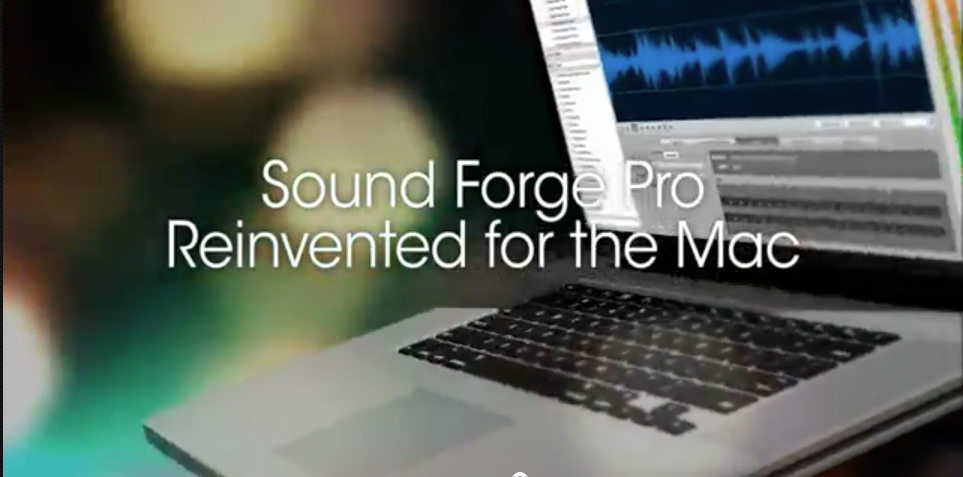
As mentioned in an earlier post, there has been a teaser campaign running for several weeks now at www.finallyonthemac.com, heralding the imminent arrival of an OS X version of Sony’s Sound Forge Pro audio recording, editing and mastering software. Well, the day has arrived – Sony Creative Software officially announced today that Sound Forge Pro v1.0 for Mac will be available later this month at a suggested retail price of $299USD.
From the press release:
“People who work on audio editing platforms recognize the need for a fresh option in the marketplace, one that’s built for OS X as Continue reading
MacUser Vol. 28 No. 18 – OS X’s Hidden Helpers. I made the front cover!!
Excuse my excitement (and the accompanying double exclamation marks), but it’s not every day that a feature you’ve conceived, written and illustrated becomes the main cover feature of one of the UK’s most eminent computer magazines.
Shining the spotlight on the hidden apps lurking in your Mac’s Utilities folder, this eight-page feature is the latest, and hopefully not the last, in a slow-yet-steady stream of pieces I’ve had published in MacUser over the last year or so, but this is the first time one of my articles has been featured so prominently. Hopefully people will find it useful, as I know that I for one, prior to researching the piece, had no clue what the majority of the apps in this folder were for, and there is some really quite useful stuff in there. It goes without saying that all the information in the piece is bang up to date and Mountain-Lion savvy, outlining any major changes implemented with the new operating system in any of the applications covered.
To discover the secrets that lie within, pick up a copy from Smiths or download it to your iDevice, Mac or PC via Zinio. Be quick though – MacUser is published every two weeks, so this issue will only be around for another few days! The article begins on p.56, and I have to take this opportunity to say a huge thanks to Adam and the MacUser team for making it look so good.
IK Multimedia Announce iRig KEYS Keyboard Controller for Mac, iPhone & iPad
Just when you think they couldn’t possibly dream up any more iOS-compatible musical accessories, IK Multimedia come up with yet another in their long line of i-Prefixed goodies. This time it’s iRig KEYS, announced yesterday.
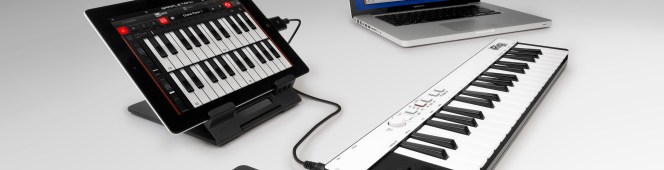
A slim, 3-octave controller keyboard for iPhone, iPad and Mac featuring 37 velocity-sensitive mini keys, proper pitch bend and mod wheels and a sustain pedal input, iRig KEYS allows connection directly to the iPhone or iPad’s 30-pin connector, obviating the need for Apple’s Camera Connection Kit accessory required by regular USB controller keyboards.
iRig KEYS is Core MIDI and USB class compliant for a true plug-and-play experience both with iOS devices or Mac/PC, so no additional app, software or drivers need to be installed to get it up and running. When hooked up to an iPhone, iPod touch or iPad, it can be powered by the device for total portability. For longer playing sessions it can be powered by the available USB port, which also powers the unit when connected to a Mac or PC.
The device works either with the included app and software or with a multitude of other MIDI-compatible DAW apps on any iOS, MacOS or Windows system. As a bonus, the package includes SampleTank Free for iOS, or SampleTank 2 L for Mac & PC, which includes over 2GB of sampled sounds. When it hits the dealers’ shelves this Autumn, iRig KEYS will be available for €74.99 (around £60 GBP).
More info available from www.irigkeys.com
Sony Sound Forge Pro 10 Coming to the Mac Platform?
If a series of teaser videos viewable at www.finallyonthemac.com is to be believed, Sony Creative Software are readying their professional-level audio recording, editing and processing software Sound Forge Pro for a Mac OS X release.
The app, which has been PC-only since its inception by Sonic Foundry in the 1990’s, has been at version 10 on the PC platform since June 2010, so it seems strange that an appearance on the Mac platform two years after the same version appeared for the PC should not be accompanied by a significant version upgrade for both platforms. However, if the shots of Sound Forge running on a MacBook Pro shown in the videos are for real, then the ranks of OS X audio editing apps are about to be joined by an accomplished, revered and versatile package that includes tools for sample-level sound design and mastering across multiple formats. It doesn’t do MIDI though, so Logic, Cubase and Pro Tools can probably sleep safe in their beds for now.
No release date has been confirmed by Sony as yet, but watch this space for more Sound Forge Pro news over the coming days.
Strike a Chord with Computer Music 182 – Video Now Included!
Hitting the ground running today after a few days break from all things digital, what’s been going on in my absence? Well, first issue of note – literally – is number 182 of Computer Music magazine, which hit the shelves on the 14th August.
Nestling within its feature-packed pages is a four-page guide from me about how to get things moving again if you get stuck in the middle of writing a chord progression. Highlighting some simple, yet tried-and-tested manoeuvres for moving your sequences forward, this issue also marks a personal milestone for me, in that it contains not just the printed walkthrough steps, but also video versions of each tutorial included on the cover-mounted DVD.
Produced and narrated by yours truly, this is my first foray into video tutorials, so if you want to check them out, nip down to Smiths today and pick up a copy of the print edition, or you can download the digital Zinio or Newsstand versions for the Mac and iPad, as the DVD content is now included with the digital versions too!
The Excitement is Mountain – Mountain Lion Officially Released Today! *Update – Now Available For Download!
Although the developer preview version has been available for a while now, it’s been announced that Apple’s latest operating system, OS X 10.8 Mountain Lion, will be officially released to the public today for download from the Apple App Store. UK users will be able to get their hands on the latest big cat for £13.99, which is the cheapest OS X upgrade yet.
Anyone who has bought a new Mac from Apple or one of their authorised resellers since June 11th 2012 will be eligible for a free upgrade from Lion to Mountain Lion via the App Store. You get 30 days from the launch date (today) to apply for the upgrade, and I’ll be taking this route myself, so I’ll let you know how it goes.
More details at http://www.apple.com/osx/uptodate
UK users can expect to see the new OS in the App Store later today, in view of the time difference between here and the US Pacific coast. In the meantime, to find out which of your apps will be compatible ahead of the launch, why not check out the fully up-to-date compatibility list at http://roaringapps.com?
*Update: As of 2pm GMT, Mountain Lion is available for download from the Mac App Store. The above-mentioned link for free upgrades for qualifying recent Mac purchasers is also now active. Go get it! Rowr!!
Computer Music 181 Out Now!
The new issue of Computer Music magazine hits the shelves this week, and inside you’ll find my four-page guide to MIDI editing by numbers. This is an in-depth illustration of how, using Cubase’s Logical Edit function and Logic’s Transform window, you can leverage the power of simple maths to perform instant, wide-ranging edits on multiple events in your MIDI sequences with just a couple of clicks. Want to fix all your note velocities to a value of 100, or all note lengths to 16th-notes? Randomise velocity within a certain pitch range? Rearrange and randomise drum loops? Add a bit of human randomness to a sequence? Use custom keyboard commands to adjust velocity? It’s all laid out here, and the article starts on page 50.
Elsewhere in the issue, I also have a review of Zynaptiq’s remarkable Unveil plug-in. The audio equivalent of a sheet of kitchen roll, this signal focussing plug-in removes excessive reverb from an audio file, allowing you to re-process it with a more suitable effect. Find out exactly what I thought of it on page 84.
The CM team have done their usual excellent job with this issue, with a detailed look at how to use the amazing Sylenth1 soft synth, a feature on how to maximise the stereo width of your mixes, and loads of other tutorials, interviews and reviews – not to mention the usual ton of free stuff on the cover disc.
WaveMachine Labs Bring 48-Track Digital Multitrack to the iPad with Auria
Could this be the iOS answer to ProTools?
This week marked a pioneering iOS app release in the shape of Auria from WaveMachine Labs. For what I’m led to believe is an introductory price of £34.99, this astonishing app will transform your iPad into a fully professional digital multitrack recorder and mixer, complete with effect plug-ins. iPad 2 or 3 owners can benefit from an incredible 48 tracks of audio playback, while iPad 1 users are limited to 24, which is still not to be sniffed at.
Auria’s list of professional-friendly features is impressive: 48 tracks of simultaneous mono or stereo playback, up to 24 tracks of simultaneous recording (when used with a suitable interface), 96kHz sample rate support, 8 assignable subgroups, 2 aux sends, waveform editing, full automation, full delay compensation and Dropbox and Soundcloud integration. A vintage-inspired PSPAudioware ChannelStrip on every channel includes built-in Expander, Multiband EQ and Compressor effects.
In addition, AAF import & export promises the transfer of complete projects to and from other Continue reading
Computer Music 180 Out Today
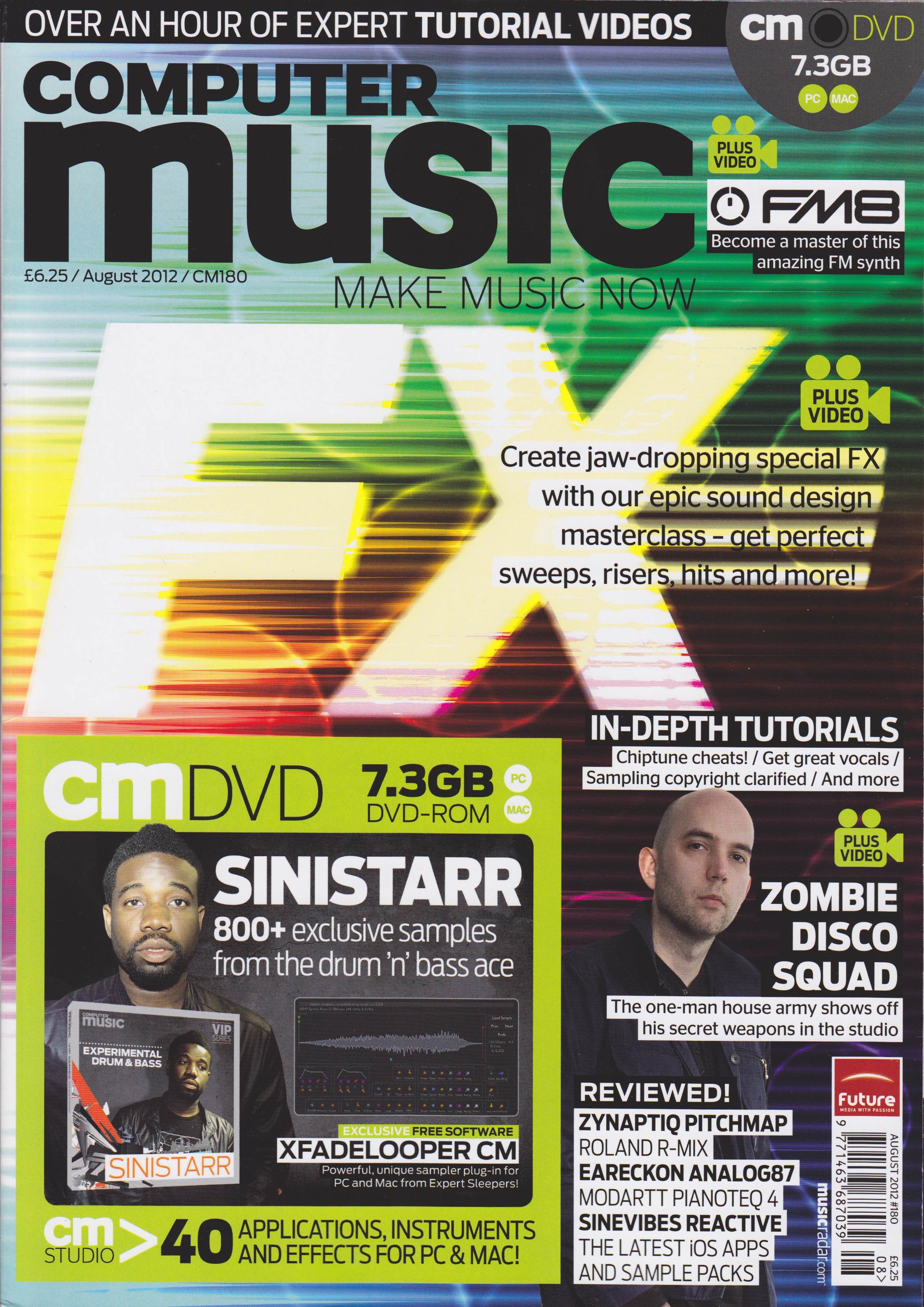
Record Great Vocals is the title of my 5-page contribution to the August 2012 issue of Computer Music magazine that hits the shelves today. A guide to getting a terrific-sounding vocal, from choosing and setting up the mic through to editing the final result, this feature is packed with handy tips and step-by-step guides to getting a great, professional-sounding vocal. Not only that, but the pictures all look very nice too!
Lots of other good stuff from the team this month, including a special FX masterclass, a focus on how to use Native Instruments’ FM8 soft synth, and loads of reviews. Check it out at all good newsagents today!
Mac Tips, Tricks & Hacks Vol.1 On Sale Today
Another Imagine Bookazine breaks cover today. Mac Tips, Tricks & Hacks Vol.1 is a weighty compendium of tips, hidden features, secret shortcuts and step-by-step guides to some of the more common hardware modifications faced by Mac owners. This was a bit of a labour of love for me, as I contributed a total of 18 pages to this inaugural volume, over a set of 6 tutorial articles.
Contributions from me include guides on how to install extra RAM and hard drives into a Mac Pro, use a Mac Mini as either a Time Capsule or a web server, replace the hard drive in a Mac Mini, replace the battery in a MacBook Air and replace the optical drive in a MacBook Pro.
Packed to the gills with a lot of other useful stuff that wasn’t written by me, you should be able to find the book in WHSmiths, but if not, it’s available online for £12.99 at http://www.imagineshop.co.uk/bookazines.
Apple’s Acquisition of Redmatica – What Does This Mean for the Future of Logic Pro?
It’s been reported this week that Apple has successfully acquired Italian software company Redmatica, creators of KeyMap Pro, EXSManager, GBSampleManager, ProManager and AutoSampler, software solutions that enabled the creation and management of large sample and sampler instrument libraries on the Mac. These apps have built up a solid reputation as serious time-savers for professional Logic users. News of this acquisition provoked an interested raise of a single eyebrow (I’m getting better at this) on my part, as I’m always on the lookout for any hint of a development that might indicate an update to Apple’s ageing Logic 9 DAW any time soon. It begs the question, why would Apple assimilate a company that makes software products that enhance the user experience of the now-very-creaky EXS24 sampler, if there was not a major rewrite in progress of the DAW of which it forms a major component?
It has been hinted that the takeover is telegraphing a boost to GarageBand’s feature set, and while the long hiatus between iLife updates means that this may also be the case, GarageBand users as a demographic are far less likely to possess the kind of large sample libraries that Redmatica’s software was designed to complement. The most logical assumption is that there’s a new version of Logic in the pipeline, and that the functionality of Redmatica’s highly-regarded products is being integrated into it. Almost three years after Logic 9 was announced, this kind of development is one of the surest signs yet that some exciting changes are finally on the horizon for Logic users.
Whatever the reason, Redmatica founder Andrea Gozzi has now closed down the company, posting a rather terse message at http://www.redmatica.com to that effect, hinting that no further support or updates will be available from that source after June 12th. Could this be another clue to its imminent reappearance as part of the much-anticipated Logic Pro X / Logic 10? Exciting stuff for Logic users.